Call Us: +8615999687320Email: carolinitilife@outlook.com
enLanguage

Pillow

Why Choose Us


Our Certificate
We have passed professional reports, like OEKO-TEX, CertiPUR-US, BSCI, ASTM-F963, and Costco factory test etc.


Our Product
We specialize in development and production of textile homeware and PU foam products, like memory foam pillow, memory foam mattress, anti-fatigue mat, weighted toys, weighted blanket, all kinds of cushions and other textile products for home and kitchen etc.


Production Equipment
Zhuzhou Suchenglan Trade Co,. Ltd is professional manufacturer of home textile products, including foaming machines, sewing workshop, vacuumed package machines, and strict quality check workshop etc.


7x24 Hours Delivery
We take quality and delivery seriously, providing all series of home products and home textile. Always follow the fashion and trends, growing up with our clients together.

First 12 Last 1/2

What is Pillow


A pillow is a cushion that is used to support the head, neck, or other parts of the body while sleeping or resting. They make pillows from a variety of materials, such as feathers, foam, cotton, synthetic fibers, and even memory foam. Pillows come in a range of shapes and sizes, and there is something to suit every sleeping position and comfort preference. We can use them as decorative items and they can even provide therapeutic benefits.


Benefits of Pillow

Comfort
The right pillow should provide adequate comfort and support while allowing the head and neck to remain in a comfortable position as you sleep. You should be able to lay your head on the pillow and go straight to sleep without thinking about its position or firmness or having to wake up and fluff it up!


Aligns the Spine
The right pillow will help to maintain the alignment of your neck in a neutral position while you sleep, but not too high or too low that it causes strain to your joints and muscles in your neck, which can cause neck pain and maybe contribute to headaches.


Reduced Snoring
The wrong type of pillow can cause the neck muscles to become strained, which may contribute to snoring. The right pillow should support the natural curve of your neck while keeping the airways open, reducing snoring and improving sleep quality.


Spinal Pressure Relief
The right type of pillow will help relieve tension throughout the body, as it helps distribute weight more evenly. A good pillow can also help reduce pressure on your hips, shoulders, neck, and back, resulting in better quality sleep.


Improved health
If you struggle to get a good night's sleep due to your pillow, then this will impact your quality of sleep, how well you function the following day, and your overall vitality. Therefore, the correct type of pillow is essential for maintaining general health and ensuring a good night's sleep.


Types of Pillow
 

Contour pillows
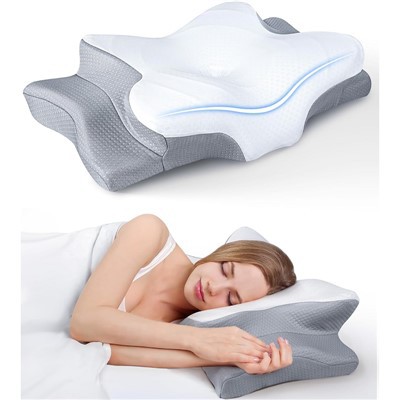
These are designed with a dip in the middle to cradle the head while providing neck support. Contour pillows are often made of memory foam, making them ideal for people with neck pain.


Standard pillows
The most common and versatile shape, these are suitable for most sleepers. They are rectangular and can come in a variety of fills.


Cervical pillows
Specially designed to support the cervical spine, these pillows help maintain the natural cervical curve while sleeping. They are often recommended for those with neck pain.


Roll pillows
Cylinder-shaped, these pillows are versatile and can be used under the neck, lower back, or knees for added support.


Body pillows
Long and often cylindrical or rectangular, body pillows provide extra support for the entire body. They are a favorite for side sleepers and pregnant women.


Application of Pillow


Decoration
A fairly obvious use for the pillow, aside from in bed, is as a decorative piece. More fancy than your average pillow, the decorative variety tends to showcase elegant embroidery, patterns or pretty designs.


Prayer rests
In ancient Europe, pillows began to be used in churches as knee rests during prayer. They were a lot more comfortable than the hard stone floor! This tradition is still present in churches today.


Energy and healing stone
On the other side of the world in ancient China, pillows were made from stone, often jade. These Chinese rock pillows were believed to transfer the stone's energy to the brain when laid on. It was believed that they cured headaches and even boosted someone's wisdom. Considering the stone's rarity and value, royalty and the rich were the main users.


Hugging pillow
Many countries across the world use hugging pillows. If you want a cuddle then this is your answer. They are long and narrow so you can wrap your legs and arms around them. In Japan, many hugging pillows have anime character designs.

Cooling Charcoal Bamboo Pillow


What Is the Best Pillow Based on Sleeping Position?


Back Sleeper
If you are a back sleeper, it is important to find a pillow that will support the natural curve of your neck. One option is a cervical pillow that is higher in the bottom third and slopes down in the center where your head lies. A standard pillow that is medium to thin in height may also offer enough support for your head without changing the angle of your neck.Back sleepers also need a pillow with a medium firmness that allows the head to be aligned with the spine. It also prevents the pillow from becoming too flat while you sleep. Consider a memory foam pillow as this type will shape itself around your head and neck.


Side Sleeper
Most people are side sleepers, sleeping in a fetal position or straight on their side. Side sleepers require a larger amount of support from their pillow, both in height and level of firmness.It is recommended that side sleepers use a pillow that offers about 4 to 6 inches of height, which can help keep the nose aligned with the sternum, filling the space between the ear and the outer shoulder. This position prevents neck strain and helps you maintain a proper posture during sleep. Body pillows may also be a good option for side sleepers, as they can support the pelvis and hips.


Stomach Sleeper
People who sleep on their stomach may need to consider what parts of their body need support in order to maintain good spinal alignment while they sleep. A stomach sleeping position can put stress on the spine or the muscles of the back and shoulders. In some cases, experts advise people with back pain against sleeping on their stomach.But if you feel most comfortable sleeping on your stomach, a pillow for stomach sleepers that is softer with a lower height may work best for you. Down and feather fill tends to be less firm than other materials and may be compressed to a comfortable height.


Pillow Filling Material

Down
Down fill comes from the undercoat of a duck or goose. Down is an extremely soft material that can quickly flatten. So while it may offer a low loft profile for those that don't need very much support, a down pillow may need to be frequently fluffed up to feel comfortable.


Feathers
Feathers also come from birds but are the outer covering of a bird rather than the undercoat. They are flatter than down and include the quill. Feather pillows are firmer than down pillows, and may hold less heat.


Memory foam
Memory foam pillows can be constructed with a solid piece of foam or with bits of memory foam inside the pillow. It can be designed to cradle the head or shift to accommodate a person's movement while they sleep. Memory foam can be denser and less breathable than other materials, which may make it harder to stay cool.


Polyester
Polyester pillow fill looks similar to cotton. It's the most common type of pillow fill, and it's also the least expensive. However, dust mites like to live in synthetic pillow fills such as polyester, so people who have certain allergies may want to avoid this material.
Latex: Latex can be synthetic or a natural material created from tree sap. Like memory foam, it may come as a solid piece or cut into many small pieces. Latex pillows can be heavier and firmer, and latex quickly returns back to its original shape after you press it.
Buckwheat: Buckwheat pillow fill is made of dry seeds. This filler tends to be very firm and can shape itself around the head and neck. Buckwheat also tends to be better for maintaining a cool body temperature.


Memory Foam Chunk Pillow


How to Choose Pillow

Pillow Shape
The typical pillow is shaped like a rectangle and comes in several sizes that correlate with the width of twin, queen, or king size mattresses. Other common shapes include cervical or neck pillows that have rounded corners contoured to fit the head and neck and longer body pillows that can provide support from the head down past the hips.


Pillow Size
Pillow size refers to how much space the pillow takes up when it is flat on the bed, while loft refers to how high or thick the pillow is. Pillow loft has a direct effect on how much support is provided to the head and neck and is an important factor when trying to prevent or relieve neck or back pain.


Pillow Fill
Material selection may be one of the most important factors to consider when choosing a pillow. The type of material a pillow is filled with will determine its loft and firmness, which is useful to know when deciding how much support your neck and shoulders may need. Different materials can influence how well the body regulates temperature during sleep. A lower body temperature tends to correlate with better quality sleep. Pillows made of fill materials and pillowcases that are breathable can lower a sleeper's body temperature and reduce the likelihood of sweating during sleep.


Process of Pillow
 
01/

Raw Material And Amount Of Production
Headrests are primarily stuffed with materials such as synthetic polyester, feathers or the combination of feathers and downs. The cheapest headrests are being manufactured using polyester which are the most durable and easy washable with least allergic reactions.

02/

Covering Construction
The very first construction in headrest manufacturing is the covering. A cotton-polyester or sturdy cotton fabric is shipped to factory in larger bolts which are treated there so that the casing that sewn can easily be separated while filling them.These fabrics are then taken to tables for cutting apart after they are calendared. Heavy shears or machines for fabric cutting are used to obtain dozens of layers at a time.

03/

Fabric Sewing
The rectangular-shaped fabric stacks are then taken to sewing machines for grabbing and sewing them together. The machine operator sews two pieces of the fabric around the edges while leaving space for stuffing them later.Mostly headrest contents are attached while sewing the edges which are in tags form listing the details. The coverings are then turning inside out for the seams to be inside of the case.

04/

Case Filling
To fill the case from polyesters, they are moved to machines already loaded that blows the polyester in these casings through the tubes loaded through blowers. Different machines perform dissimilar functions for filling these casings.The structure and expensiveness of these machines is proportional to the filling speed of headrests. Normal machines are filling around 100 headrests per hour.

05/

Closing The Openings
After filling the headrest casings from polyester, they are then taken to another platform where workers close their openings with the help of an industrial machine. Later, these filled casings are weighted on the same platform to ensure that all of them contain the required and predefined amount of batting into them.

06/

Additional Casings
When the openings are all covered, these headrests are then shifted to another station where machines bag them. Thin plastic bags are used to insert these casings into them individually. Later, when they are all bagged, they are packed into boxes for shipping.


How to Take Care of Pillowsstep

Air It Out

Giving your pillows a daily fluff is the best way to keep them looking and feeling their best. This simple task helps to restore their shape and remove dust. For an extra deep clean, hang them outdoors on a clothesline for a few hours every month or so. If you can't hang them outside, running them through the dryer on the no-heat cycle is a good alternative.

Wash it gently

You should wash your pillow at least every 4 to 6 months. If you sweat a lot, have a habit of eating in the bed, or have pets with whom you share your bed, you should wash it more often. Washing a pillow is not difficult, but it does take some time to dry.

Dry it thoroughly

Once you complete the washing process, get your pillow completely dry—otherwise, you risk mildew.Latex pillows: Air-dry your latex pillows. The UV rays from the sun can damage the latex foam, causing it to break down over time. So make sure you air-dry them away from direct sunlight.


Our Factory

Zhuzhou Suchenglan Trade Co,. Ltd is professional manufacturer of home textile products, including foaming machines, sewing workshop, vacuumed package machines, and strict quality check workshop etc..3 factory bases aim at different clients. Vietnam factory produce some mature product with big quantity. Yongan factory features foaming products like mattress, and cutting pillows and cushion. While Suzhou factory is most flexible, producing lots of new and small quantity products.We have passed professional reports, like OEKO-TEX, CertiPUR-US, BSCI, ASTM-F963, and Costco factory test etc.. Our clients involve Amazon shop, Chain supermarket, and Shopify brand etc.. The MOQ can be adjusted and flexible to meet our clients' request.

productcate-1-1
productcate-1-1
productcate-1-1
productcate-1-1


FAQ

Q: How can I make my pillows last longer?

A: Making Your Pillows Last Longer
All pillows need a little TLC. Adding a pillow protector helps prolong your pillow's lifespan and add an extra layer of comfort. A soft cotton zipped pillow protector will more effectively protect from odour, stains and dust mites than an unzipped envelope style pillow protector.

Q: How often should you wash the inside of a pillow?

A: If your pillow can be washed, it should be washed at least twice a year. If you eat in bed, have pets, or sweat a lot, you should wash pillows quarterly. Special pillows like body pillows or throw pillows should be cleaned every 3 to 6 months. This is dependent on how, where, and how often they are used.

Q: How long are pillows supposed to last?

A: Every 1 to 2 years
Most experts recommend replacing pillows every 1 to 2 years. Doing so helps to ensure that you're using pillows that are supportive, clean, and free of allergens. It is also important to care for the pillows you use to ensure their longevity. Generally, you'll be able to tell when it's time to replace your pillows.

Q: Why do pillows turn yellow?

A: Pillows turn yellow because of sweat. There are other reasons why a pillow may start to turn yellow including falling asleep with wet hair, lotions and oils on the skin, and moisture. When moisture or sweat remains on the pillow for long periods of time, the pillow will turn yellow.

Q: What happens if I don't wash my pillow?

A: “It is recommendable to wash pillows once or twice a year. Over time, they accumulate traces of sweat, sebum and dead skin cells, as well as microorganisms like bacteria and dust mites, which is why they should be washed, not just the pillowcases.

Q: How do hotels keep pillows fresh?

A: Hotel pillows are usually encased in protective covers and pillowcases that are laundered as often as the sheets. However, the pillows themselves are rarely washed. This may not bother you since your face and head only make contact with a pillowcase.

Q: When to throw out a pillow?

A: Depending on the material quality and type used to fill the pillow, it could need replacing any time between 1 to 10 years, or more. Just like your mattress, it's important to replace your pillows when they have reached the end of their lives.Luxury hotels generally use pillows that are made with 100 percent duck or goose down that offers ultra-soft comfort as well as insulation. If you're looking for a hotel-quality pillow that doesn't rely on animal down, bamboo or synthetic down alternatives can be just as plush and comfortable.

Q: How often should I wash bed sheets?

A: Every two weeks
Joining you in bed are countless dust mites and bacteria, not to mention lots and lots of your own dead skin. Dermatologist Alok Vij, MD, says you should wash your sheets at least every two weeks — maybe more, depending on factors like whether you live in a warm climate and whether your pet sleeps in your bed.

Q: Can I just throw my pillow in the washing machine?

A: Down or feather: Most down pillows can be put in the washing machine. But use cool water and a mild detergent, then dry on low heat. (High temperatures can damage the down.) Memory foam or latex: Washer agitation can break up slab-style foam pillows, so Handel suggests skipping the washing machine for these pillows.

Q: Should I throw away my yellow pillow?

A: Should I throw out yellow pillows? Not always. If the stains are minimal after washing the pillow and it still holds its shape, it may be ok to keep it. If it smells musty or damp or the stains cannot be removed, it may be time to purchase a new one.

Q: Can you put pillows in the dryer to fluff?

A: Putting your pillow through a dryer cycle is another easy way to restore its shape. To help knead the pillow more effectively, try adding in a dryer ball or tennis ball with it. To get it as fluffy as possible, make sure your pillow is fully dry before using this method.

Q: How to deodorize pillows?

A: Step 1: Remove your pillow from the protective cover and spot clean stains with a baking soda and water paste. If your pillow has a strong odor, spray a 50/50 vinegar and water mix to eliminate the smell. Be sure to spray lightly and let the mix stand for five minutes before blotting the pillow dry with a towel.

Q: How to disinfect pillows without washing?

A: Sprinkle small amounts of baking soda on your pillows to remove moisture and smells. This ingredient effectively protects against bacteria and pathogens. Let it settle on your pillows for at least 30 to 60 minutes. Remove it using a vacuum cleaner with an upholstery attachment.

Q: Why do hotels give 2 pillows?

A: Make a backup pillow.But if you stack two pillows on top of each other to use, things are different. At this time, the pillow will become firmer and help improve sleep. Therefore, the hotel prepares two pillows at the head of the bed in case customers need to use them to put them on top of each other.

Q: Do hotels wash comforters after every guest?

A: Typically, hotels wash their bedding once every week including various kinds of comforters, sheets, and pillows. However, they often swap out the pillowcases and linens between the guests. It's a common practice that the hotel comforters are rarely automatically changed – unless a guest requests it.

Q: Why are hotel pillows so great?

A: Hotel pillows are softer, fluffier and more luxurious. Their fill material is usually 100% genuine goose down or feathers. Hotel pillows offer long-lasting support for the head and upper body. The cloud-like feel of hotel pillows is amazing for keeping your head, neck and spine healthily aligned.

Q: What type of pillow lasts the longest?

A: Memory Foam: Similar to polyfoam pillows, memory foam pillows last on average 2 to 3 years. Latex: Solid latex pillows are usually more durable than polyfoam and memory foam pillows. Latex pillows typically last 2 to 4 years.

Q: Should I throw away yellow pillows?

A: First, wash your pillow according to the care instructions on its care tag or brand website. Then, check if your pillow is still stained or smells like mildew or is too flat to support your head. If any of these are true and your pillow is one to two years old, it's definitely time to throw away your yellow pillow.

Q: What is better firm or soft pillow?

A: A firm pillow offers consistent support and improves spinal alignment, making it ideal for side and back sleepers. Meanwhile, a soft pillow conforms to the shape of the head and neck, providing cushioning and moldability that may suit some sleepers. Soft pillows are best for stomach sleepers who require neck support.

Q: How often should I wash my pillowcase?

A: Once weekly
For a better night's sleep and reduced issues with skin conditions and allergic reactions, change your pillowcase at least once weekly. Clean pillowcases are essential, and you should consider changes more frequently if you allow pets on your bed.

Q: When should you throw away pillows?

A: Every 1 to 2 years
Most experts recommend replacing pillows every 1 to 2 years. Doing so helps to ensure that you're using pillows that are supportive, clean, and free of allergens. It is also important to care for the pillows you use to ensure their longevity. Generally, you'll be able to tell when it's time to replace your pillows.

We're well-known as one of the leading pillow manufacturers and suppliers in China. Please rest assured to wholesale high quality pillow made in China here from our factory. For price consultation, contact us.

custom floor mat, sleeping

(0/10)

clearall